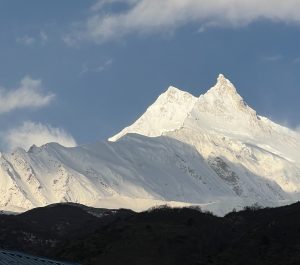
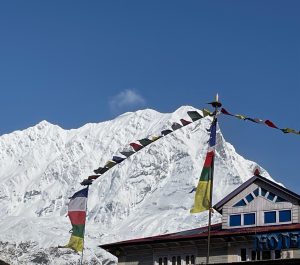
What really makes the Manaslu Circuit Trek unique is the combination of culture, tradition, and incredible mountain views, all in a single journey. Unlike other Everest or Annapurna regions, the Manaslu Circuit Treks remain less crowded and highly preserved, offering you the best trekking experience. It circles Mount Manaslu (8,163m), the eighth-highest mountain in the world, and passes through Manaslu Conservation Area. It is home to over 2,000 plant species, 110 bird species, and rare animals like snow leopards and red pandas. The trail follows the Budi Gandaki River (197km), crossing through deep gorges, suspension bridges, and local villages, before reaching the Larkya La Pass (5,160m)- one of the longest and most beautiful mountain passes in Nepal.
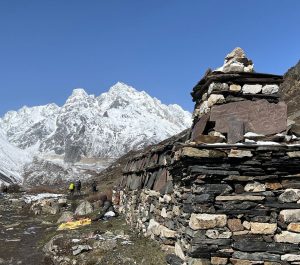
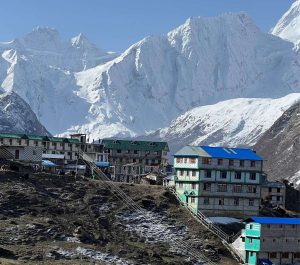
Adding to its uniqueness, this trek takes you through beautiful villages like Samagaun, Lho, and Samdo. In these villages, you’ll see ancient monasteries, old cultures, and traditional stone houses, all sitting beside the towering peaks like Himlung Himal (7,126m) and Ngadi Chuli (7,871m). This region was opened to trekkers in 1990, which requires special restricted permits, so the traffic is less here, which has helped to preserve its natural and cultural integrity. The Manaslu Circuit isn’t just a trek- it’s a rare opportunity to experience the Himalayas in their original and unspoiled form.
Manaslu Circuit Trek Cost
The Manaslu Circuit trek costs around $955 on a joining basis and $1,055 as a private trip. This price typically covers your transportation (Kathmandu to the starting point of the trek and back), permits, guide and porter fees, accommodations in teahouses, and three daily meals (Breakfast, Lunch, Dinner) throughout the trek. It also includes basic logistics like government taxes and agency service charges.
The cost difference mainly depends on the group size and personal service. A private trip offers more logistical services and personal attention, while a basis trip means you’ll be joining a group of other trekkers or you’ll go as a shared trip. However, both options make sure you’re fully supported, safe, and legally protected in this restricted and remote region of Nepal.
Getting ready for the Manaslu Circuit Trek
Preparing for the Manaslu Circuit Trek starts with building your physical fitness. This trek takes you through difficult mountain trails, steep and high-altitude climbs, so your body needs to be ready. Start walking or jogging for nearly 45 minutes regularly, at least 4-5 times a week. If you live near hills or stairs, it is better to hike with a backpack so that you’ll build up the habit, which will be very helpful. Strengthening your legs and improving your stamina will help you walk 6-8 hours a day during the trek. Cardiovascular fitness is key because it helps your body to use oxygen efficiently, especially when you’re above 3,000 meters, where the air is thinner.
Along with physical fitness, don’t forget mental preparation as well. The Manaslu circuit is a challenging and remote trek with limited facilities to use, along with unpredictable weather. So being mentally ready to face issues ike basic logistics, no WiFi, and cold nights is also very important. Also, try to do some shorter treks beforehand if possible. Preparing well means you’ll enjoy the majesty of the Manaslu region without worrying too much about headaches or altitude sickness.
Why the Manaslu region is a restricted area
Manaslu region is marked as a restricted area by the Nepalese government mainly due to its location near the Tibetan (China) border and its rich, preserved Tibetan culture. This area is home to ethnic groups like Tibetan-origin Nubri and Tsum communities, who follow Buddhist traditions that have been passed down for centuries. You’ll find centuries-old monasteries (like Mu Gompa and Ribung Gompa), mani walls, chortens, so in order to protect these structures and culture from over-commercial tourism, the region remains restricted.
Because of these conditions, all trekkers must obtain a Restricted Area Permit (RAP), Manaslu Conservation Area Permit (MCAP), and Annapurna Conservation Area Permit (ACAP) to enter. You cannot trek solo here, and you must be in a group of at least two people (excluding the guide) and be accompanied by a licensed guide. These rules help to preserve the local life of people living there and maintain security near the international border.
Why Larkya La Pass is a key part of the Manaslu Circuit
Larkya La Pass is one of the most important and memorable parts of the Manaslu Circuit Trek because it is the highest point of the trek, standing at 5,160 meters (16,929 feet). Crossing this pass is both a physical and mental challenge for most trekkers. It offers breathtaking views of snow-covered mountains like Manaslu (8,164m), Cheo Himal (6,820m), Himlung Himal (7,126m), and Kang Guru (6,981m), making it a great reward after trekking through remote valleys and villages for days.
The pass also serves a useful purpose, it’s the natural connection between the Budhi Gandaki Valley and the Marsyangdi Valley. Because of its high elevation and landscapes, weather conditions can change quickly, so careful planning and proper acclimatization are mandatory. The successful crossing of Larkya La is considered the final challenge of the trek, and for many, it’s the moment that defines the Manaslu experience.
Manaslu Circuit vs Annapurna Circuit
| Feature |
Manaslu Circuit Trek |
Annapurna Circuit Trek |
| Highest point |
Larkya a Pass (5,160m) |
Thorong La Pass (5,416m) |
| Permit Requirements |
Restricted Area Permit (RAP)+ ACAP + MCAP |
ACAP + TIMS only |
| Notable Himalayan Views |
Mount Manaslu (8,163m), Himlung Hima (7,126m), Ganesh Himal (7,422m), Shiringi Himal (7,187m), Cheo Himal (6,812m), Larke Peak (6,249m) |
Annapurna I (8,091m), Dhaulagiri (8,167m). Machapuchare/Fishtail (6,993m), Annapurna II (7,937m), Annapurna III (7,555m), Annapurna IV (7,525m), Gangapurna (7,455m), Tilicho Peak (7,134m), Nilgiri (7,061m) |
| Scenery |
Remote valleys, glaciers, wild terrain |
Rice fields, waterfalls, and the desert-like Mustang |
| Crowd level |
Low (less crowded and peaceful) |
High (especially busy in peak seasons) |
| Cultural experience |
Tibetan Buddhist culture (Nubri/ Tsum) |
A mix of Gurung, Thakali, and Tibetan influences |
| Trek duration |
12-14 days |
15-20 days |
| Total permit cost (USD) |
$100-125 (including RAP) |
$40 -50 |
| Guide required |
Yes (Mandatory) |
Optional |
| Average daily budget (USD) |
$30-40 |
$25-35 |
Hidden Villages of Manaslu that Don’t Exist on Google Maps
While trekking the Manaslu circuit, you’ll pass through Himalayan villages so remote that even Google Maps hasn’t caught them up. These hidden places like Jagat (1,340m), Philim (1,570m), Deng (1,860m), Namrung (2,630m), Lho (3,180m), Shyala (3,500m), and Samdo (3,860m) offer more than just resting points. Each village has unique features. Jagat is a UNESCO gateway checkpoint, Namrung is known for its Buddhist monasteries, while Samdo, which is located near the Tibetan border, is a cultural outpost. These villages are not much recognized by Google Maps, but they are rich in history, tradition, and culture.
The deeper you trek, the farther you go from the digital world and the closer you get to the mountain life. Places like Lho, with the stunning view of Manaslu’s north face, and Shyala, situated among the tallest peaks, are some of the best examples of the Himalayan beauty. Without good networks and road access, these villages have preserved their identity for centuries.
Challenges you’ll face on the Manaslu Circuit Trek
The Manaslu circuit trek is stunning, but it is not like a regular walk in the park. One of the biggest challenges is altitude. As you climb above 5,000 meters at Larkya La Pass (5,106m), the risk of altitude sickness starts to rise gradually. Symptoms like headaches, dizziness, and shortness of breath can hit those who ascend too quickly without proper acclimatization. The trail also involves long day hikes, often 6-8 hours a day, on steep, rocky, and difficult landscapes that test your stamina and focus.
Another major challenge is the remoteness of the region. Unlike other trekking routes in Nepal, which are more developed, the Manaslu Circuit Trek has limited access to medical facilities, supplies, and communication. Some villages like Deng or Samdo have only basic lodges, and power outages are common. You’ll need to carry essentials to prepare for the cold nights, especially above 3,000 meters, and stay mentally strong. But the remoteness, challenges, and difficulties are the part that makes this trek an unforgettable Himalayan adventure.
Is the Manaslu Circuit Trek suitable for beginners?
The answer is no. The Manaslu Circuit Trek is not ideal for beginners. The reason is that it is physically demanding and takes you to a high altitude, with he highest point being Larkya La Pass at 5,106 meters. The trail includes nearly 5-8 hours of walking per day, so beginners may struggle with the altitude, cold temperatures, and basic facilities along the route. Without proper trekking experience or a good level of fitness, it can be a tough choice.
But if a beginner trains well, is in excellent health, and is well supported by a guide and porter along the way, then it is possible. Many trekkers choose easier and lower-altitude trekking spots like Ghorepani Poon Hill or parts of Annapurna region to build experience before going for Manaslu circuit. For those who have fully prepared everything from head to toe, the rewards of the Manaslu Circuit, like cultures, gorgeous mountain views, and peaceful trails, make it one of Nepal’s most rewarding adventures.
Guide to Manaslu Circuit trekking permits
- Manaslu Restricted Area Permit (RAP): This permit was introduced in 1991 when the region was opened to foreign trekkers. The government of Nepal, through the Department of Immigration, issues this permit to control the number of tourists and preserve the natural and cultural heritage. The cost differs by season: it’s USD 100 per person for the first 7 days, from September to November, and USD 15 per additional day. From December to August, it’s USD 75 for the first 7 days, and USD 10 per additional day.
- Manaslu Conservation Area Permit (MCAP): It was introduced in 1997. This permit is managed by the National Trust for Natural Conservation (NTNC). The main aim of this permit was to support conservation and sustainable tourism in the Manaslu region. The cost is NPR 3,000 (about USD 23) per person for foreigners and NPR 1,000 for SAARC nationals. This permit is valid for the entire duration of your trek, it doesn’t matter how many days you stay.
- Annapurna Conservation Area Permit (ACAP): It was also issued by NTNC in 1992. You’ll need this permit because the Manaslu Circuit Trek joins the Annapurna Circuit near Dharapani. The cost is the same as MCAP, i.e, NPR 3,000 (around USD 23) for foreigners and NPR 1,000 for SAARC nationals.
Note: All three permits must be obtained through a registered trekking agency. So, our agency, Rafttrek Nepal, will take care of all the required permits and paperwork, making the process smooth and stress-free. Contact our team members, and we’ll be in touch soon.
Manaslu Circuit Trek Packing List
Clothing and Warm Gear
- Thermal Base layers
- Fleece or down jacket
- Waterproof and windproof shell jacket
- Insulated trekking pants and waterproof overpants
- Gloves (inner and outer), warm hat, trekking shorts or light pants for lower altitudes
- Woolen socks (multiple layers)
- Lightweight sleeping bag (rated for -10°C or below)
Footwear essentials
- Well-broken-in trekking boots (waterproof preferred)
- Comfortable camp shoes and sandals
- Gaiters (optional but useful in snow or mud)
- Blister plasters or foot balm
Health and First Aid Kit
- Diamox (for altitude sickness)
- Painkillers (like ibuprofen or paracetamol)
- Anti-diarrheal tablets
- Rehydration salts or electrolyte powder
- Band-Aids, antiseptic cream, and medical tape
- Sunscreen (SPF 30+), lip balm with SPF, insect repellent
Tech and Trekking Gadgets
- Power bank (solar or pre-charged)
- Universal travel adapter
- Cameras or smartphones with extra storage.
- GPS watch or an offline maps app
- Lightweight trekking poles
Toiletries and Hygiene items
- Toothbrush and toothpaste
- Wet wipes and hand sanitizer
- Quick-dry towel
- Toilet paper (2 rolls are needed)
- Nail clippers, hair bands, and female hygiene products
Documents and Money
- Passport with Nepali visa
- Trekking permits (RAP, ACAP, MCAP)
- Passport-sized photos (for permits)
- Cash in Nepali Rupees
- Insurance documents ( including emergency evacuation coverage)